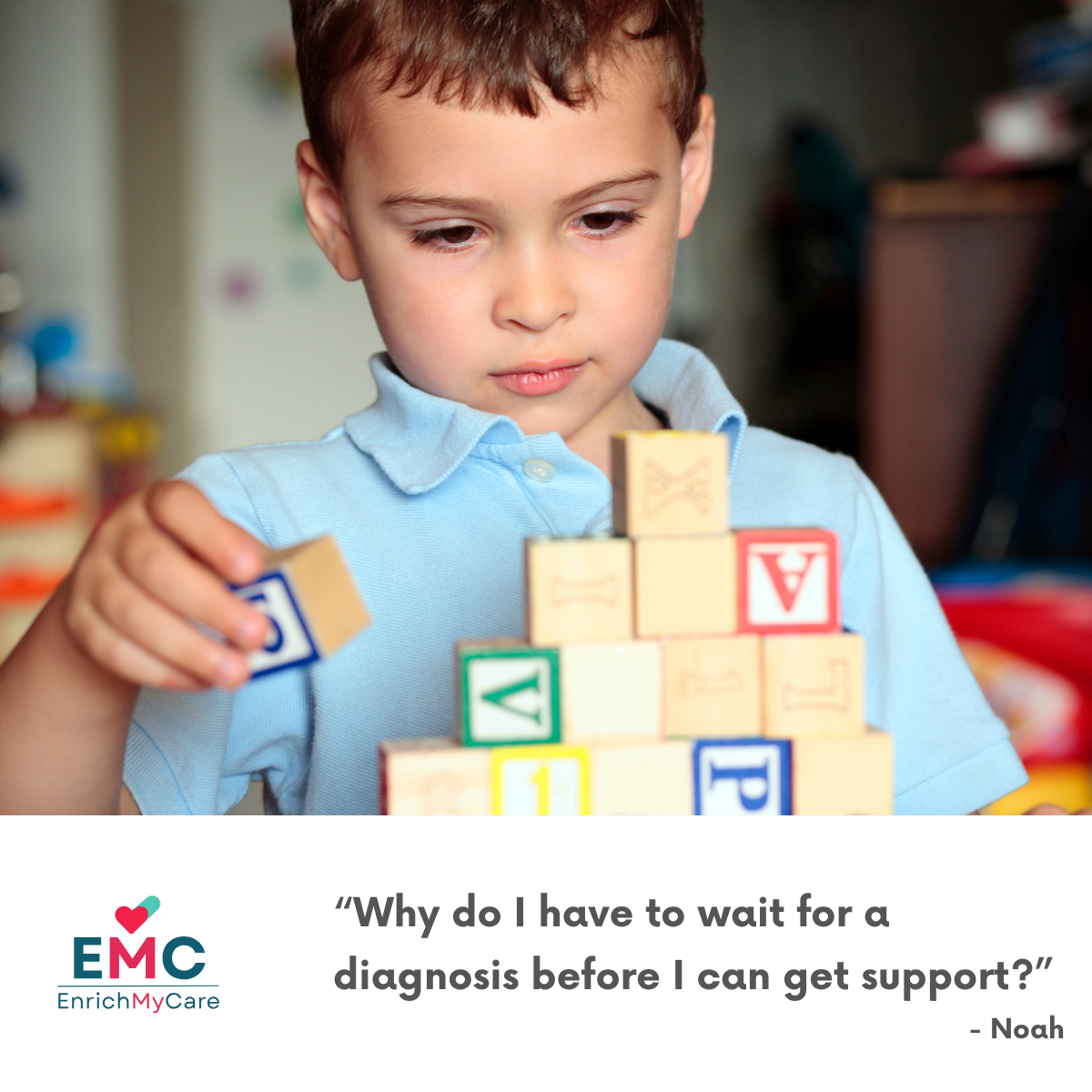
For many children and young people experiencing neurodevelopmental difficulties, accessing appropriate support can be a long and complicated journey.
Families may recognise developmental, behavioural, emotional or learning difficulties early. Teachers may observe challenges affecting a child’s participation in school. Healthcare professionals may identify concerns that warrant further assessment.
Yet, despite these concerns being recognised, meaningful support can sometimes remain difficult to access until a formal diagnosis has been established.
For children waiting for autism or ADHD assessments, this can mean months or even years of uncertainty.
The question is increasingly difficult to ignore:
Why should access to support depend on how quickly a child can obtain a diagnosis?
The publication of the independent Fonagy Review in October 2026 represents an important development in the national conversation about autism, ADHD and mental health services.
The review highlights two interconnected challenges.
First, people are waiting far too long for assessment, diagnosis and treatment.
Second, diagnosis has increasingly become a gateway to support that could potentially be provided much earlier.
The review recommends moving towards a “needs-led plus diagnosis” model of care.
This is an important distinction.
It does not diminish the clinical value of diagnosis. A comprehensive diagnostic assessment remains important for many children and young people, particularly where difficulties are complex, coexisting conditions are suspected or specialist interventions are required.
Instead, it challenges the assumption that support must wait until the diagnostic process has concluded.
Waiting for an assessment is not necessarily a passive period in a child’s development.
During this time, difficulties with communication, attention, emotional regulation, learning or social participation may continue to affect everyday life.
Families may struggle to understand their child’s needs or identify appropriate strategies.
Schools may recognise difficulties but lack access to coordinated information and specialist advice.
Healthcare professionals may have limited visibility of how a child’s difficulties are affecting daily functioning across different environments.
The consequences extend beyond the eventual diagnostic appointment.
For some children, the waiting period may coincide with important developmental and educational transitions.
This raises an important clinical and service-design question:
How can we make the period before diagnosis more supportive, informative and clinically meaningful?
The Royal College of Paediatrics and Child Health has welcomed the move towards a needs-led approach while also emphasising the importance of appropriate specialist services.
Both principles matter.
A needs-led approach should not become a justification for reducing access to diagnostic assessment or redirecting children away from specialist services without appropriate clinical consideration.
Instead, it should enable services to identify difficulties earlier, understand their impact and provide proportionate support while maintaining access to timely, high-quality assessment.
For children with significant or complex needs, this may also mean earlier identification of risks and more appropriate prioritisation.
The objective should be to provide the right support, at the right time, without compromising clinical quality.
Much of the national discussion understandably focuses on the number of children waiting for assessment.
Waiting-list size and waiting times are important indicators of service pressure.
However, they do not necessarily explain how effectively the wider clinical pathway is functioning.
A neurodevelopmental pathway involves multiple stages.
Concerns are identified. Information is collected. Referrals are submitted. Clinical teams review the available evidence. Decisions are made about assessment, prioritisation and support.
Families, schools, primary care professionals and specialist services may all contribute information at different points.
When these processes are fragmented, services can experience duplication, incomplete referrals, repeated information gathering and avoidable administrative work.
Improving assessment capacity is important, but it may not be sufficient if the processes surrounding assessment remain inefficient.
This is why the conversation needs to extend beyond waiting-list reduction towards whole-pathway improvement.
One practical opportunity lies in improving how information is collected, structured and shared.
Families understand their child’s experiences at home.
Schools observe learning, participation, attention and behaviour within educational environments.
Healthcare professionals bring clinical expertise to interpreting these observations and identifying possible underlying conditions.
Each perspective contributes valuable information.
However, the clinical value of that information depends partly on whether it is available, relevant and sufficiently complete when decisions need to be made.
Structured information gathering, appropriate digital workflows and coordinated communication can help clinicians develop a more comprehensive understanding of a child’s needs.
This does not replace clinical assessment.
It can help ensure that assessment and prioritisation decisions are informed by the right information at the right stage of the pathway.
The Fonagy Review also recognises the potential role of digitally enabled assessment and prioritisation.
Technology, including appropriately governed artificial intelligence, may help services organise information, identify gaps and support clinical review.
However, technology should not become the starting point for pathway redesign.
The starting point must remain the clinical need.
Before introducing digital tools or AI, services should understand how their existing pathways function, where delays arise, how information moves between organisations and where clinical capacity is being used.
Only then can technology be introduced purposefully to support agreed clinical and operational objectives.
Clinical judgement, accountability and appropriate professional oversight must remain central.
The Fonagy Review provides an opportunity to reconsider how neurodevelopmental services are organised.
Its recommendations suggest a future in which identifying needs, providing support and undertaking diagnostic assessment are complementary activities rather than strictly sequential steps.
Achieving this will require more than additional assessment appointments.
It will require coordinated working across healthcare, education and community services, appropriate specialist capacity, better information flows and a sustained focus on clinical pathway improvement.
Most importantly, it will require services to consider the experience of children and families throughout the entire pathway.
A child should not have to wait for a diagnosis before their needs are recognised and appropriate support begins.
The challenge now is translating that principle into practical, safe and sustainable changes across neurodevelopmental services.
At EnrichMyCare, our work with NHS services is focused on improving complex clinical pathways by bringing together information from families, schools and clinicians, supporting better clinical workflows and enabling services to understand and improve demand, capacity and flow.
Our approach starts with the pathway and the clinical need. Digital technology and clinical intelligence are used where they can meaningfully support clinicians, families and services.
Are you working to improve a neurodevelopmental pathway?
We would be interested in hearing about the challenges your service is facing.
Independent Review into Mental Health Conditions, ADHD and Autism – Final ReportDepartment of Health and Social Care, October 2026
Read the Fonagy Review →
RCPCH response to the Fonagy ReviewRoyal College of Paediatrics and Child Health, October 2026
Read the RCPCH response →
Backed by Oxford University Hospitals

Institutional shareholder in Enrich Digital Technologies Ltd.
Working Across the NHS, Academic & Innovation Ecosystem






Our Assurance and Recognition
Meeting rigorous standards for safe, secure and clinically governed digital healthcare.




Developed and evaluated in partnership with NHS clinical teams.